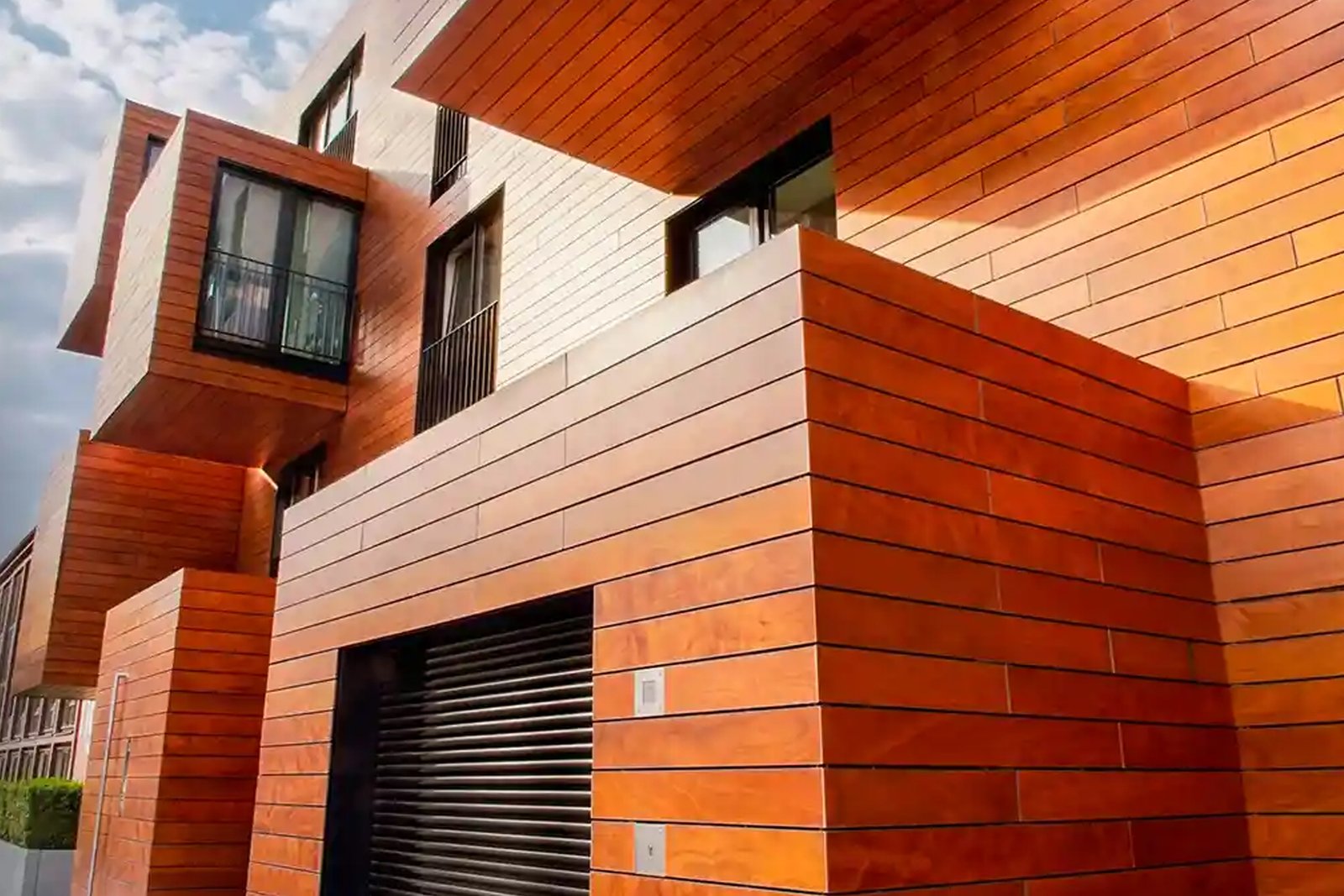
What is HPL Cladding?
High-Pressure Laminate (HPL) cladding is a robust architectural surface material made by compressing multiple layers of kraft paper and decorative paper impregnated with thermosetting resins under high pressure and temperature. The result is a dense, durable exterior-grade panel with rich, natural textures and superior resistance to weathering.
At The NestX, we supply and install HPL cladding systems that bring warmth, texture, and long-term performance to your built environment. From building elevations and balconies to soffits and interior feature walls, our HPL façades are engineered to perform in Indian climatic conditions while elevating the overall design language of your project.
Why Choose HPL Cladding with The NestX
Why Our HPL Façade Solutions Stand Out
Texture, performance, and detail — engineered to last.
-
Rich Textures & Natural Finishes
Available in wood, stone, concrete, and abstract textures that add warmth and character to façades, balconies, and interior spaces.
-
UV & Weather Resistance
Exterior-grade HPL panels are designed to withstand UV radiation, rain, heat, and humidity without cracking, peeling, or delaminating.
-
Fade-Resistant Colours
Lightfast surface technology helps retain colour vibrancy and appearance over years of outdoor exposure.
-
Impact & Scratch Resistance
Dense, high-pressure construction offers strong resistance to impact, abrasion, and surface scratches in high-traffic areas.
-
Low Maintenance & Easy Cleaning
Smooth, closed surfaces make cleaning simple and reduce life-cycle maintenance costs compared to painted or plastered finishes.
-
Versatile Exterior & Interior Applications
Ideal for building elevations, balcony cladding, soffits, parapets, canopies, interior wall paneling, reception backdrops, and partitions.
Our HPL Cladding Execution Process
End-to-End Support from Design to Installation
-
1. Site Study & Substrate Assessment
We review the building substrate, exposure, orientation, and performance needs to define the right HPL system and fixing strategy.
-
2. Design, Texture & Colour Selection
Our team supports you with elevation concepts and helps select texture, colour, and panel size combinations that align with your brand and architecture.
-
3. Technical Detailing & Shop Drawings
We prepare detailed shop drawings including panel layouts, joint patterns, support framing, ventilation gaps, and fixing details.
-
4. Sub-Structure Fabrication
We fabricate and install the required aluminium or MS framing with proper levels, alignment, and anchoring to receive the HPL panels.
-
5. Panel Cutting & Installation
HPL panels are cut, drilled, and fixed using recommended accessories and fixing systems, maintaining joint alignment and ventilation gaps.
-
6. Quality Check, Sealing & Handover
We check panel alignment, joint uniformity, fixing integrity, and finishing before handing over a clean, ready-to-use façade.
HPL Cladding – Frequently Asked Questions
-
How long does HPL cladding last outdoors?
Exterior-grade HPL, when installed with the correct framing and fixing system, can offer long-term performance typically in the range of 15–20+ years, depending on brand, exposure, and maintenance.
-
Is HPL cladding waterproof and UV-resistant?
Yes. HPL cladding panels are designed to be weather-resistant and UV-stable. When installed as a ventilated façade with proper overlaps and joints, they effectively protect the underlying wall from direct exposure.
-
Can HPL be used for interiors as well?
Absolutely. HPL is widely used for interior wall paneling, feature walls, reception areas, partitions, and ceilings where a premium textured finish is desired.
-
Is HPL cladding difficult to maintain?
No. Routine cleaning with mild detergent and water is usually sufficient. The non-porous surface resists stains and significantly reduces repainting and repair cycles compared to traditional plaster finishes.
-
Can HPL cladding be combined with ACP or glass façades?
Yes. We frequently integrate HPL with ACP cladding, structural glazing, and spider glazing to create dynamic, mixed-material elevations that offer both texture and transparency.